Servicing Your Liferaft: Requirements, Process & Best Practices
A liferaft is the last line of defense between a vessel in distress and open water. It is not a piece of equipment you hope to use. It is equipment you must be able to trust completely if you ever do. That trust depends almost entirely on one thing: whether it has been properly maintained.
Liferaft servicing is not simply a best practice. For many vessel operators, it is a legal requirement under U.S. Coast Guard (USCG) regulations and the International Convention for the Safety of Life at Sea (SOLAS). Skipping or delaying service puts both your crew and your regulatory standing at risk.
This guide walks through everything you need to know: the regulatory requirements, what happens during a proper service, the problems we find most often, and how to stay on top of your schedule. It comes from the team at Liferaft Services, which has operated USCG-approved liferaft service stations in Maine since 2014.
How Often Does a Liferaft Need to Be Serviced?
Most inflatable liferafts require servicing on a fixed interval, typically every one to three years depending on the raft type, manufacturer specifications, and how the vessel is used. That interval is not a suggestion. It is built into the certification of the raft itself, and an overdue service tag can result in failed inspections or voided coverage.
USCG Requirements
The U.S. Coast Guard mandates that inflatable liferafts carried aboard commercial vessels, such as commercial fishing and passenger vessels, be serviced annually at approved service facilities. The one exception is that new liferafts generally come with a two-year initial certification from the manufacturer, then default to annual service after that. Uninspected recreational vessels are not always subject to the same mandatory intervals, but carrying an unserviced raft provides little actual protection.
SOLAS Requirements
Vessels operating under SOLAS conventions, primarily commercial ships on international voyages, are held to stricter standards. SOLAS requires annual servicing for inflatable liferafts, with no two-year extension for new rafts, and the service must be performed at a manufacturer-approved or flag-state-recognized station. Documentation and certification of the service must be maintained onboard.
Recreational vs. Commercial Vessels
Commercial operators face the most stringent requirements and the most serious consequences for non-compliance. Recreational boaters have more flexibility in what they are legally required to carry, and many recreational rafts are certified for longer service intervals. But carrying a liferaft that is out of service still creates real risk. If the raft fails to inflate or contains expired survival equipment during an emergency, the consequences are the same regardless of vessel class.
Important
Regardless of vessel type, servicing must be performed at an approved service station, a facility authorized by the raft manufacturer and, for commercial rafts, approved by the USCG. Not every marine shop qualifies. Confirm authorization before dropping off your raft.
What Does Liferaft Servicing Include?
A proper liferaft service is a comprehensive inspection and refit, not a quick look and a new sticker. In reality, every component of the raft is meticulously inspected, following both USCG regulations and the manufacturer's servicing procedures for that specific brand and model. Servicing a single liferaft can take an experienced technician anywhere from four to eight hours or more. Technicians at an authorized station will perform the following:
- 1Container or valise inspection: The outer housing is examined for cracks, UV degradation, moisture intrusion, and, on container-packed rafts, damage to the hydrostatic release and mounting hardware.
- 2Inflation and leak testing: The raft is fully inflated at every service to test leak integrity, transfer and overpressure valve function, and overall condition of the raft. Every five years, the raft is inflated using its own inflation system to test the CO2 cylinder, inflation hoses, firing head, and the integrity of all buoyancy tubes. Any leaks are located and repaired.
- 3Inflation system inspection: The CO2 cylinder is weighed to confirm a full charge, and the inflation hoses and firing head (the mechanical device that releases gas into the raft's buoyancy chambers) are checked for corrosion and wear.
- 4Structural inspection: The canopy, floor, seams, and attachment points are checked for wear, delamination, and damage that could compromise the raft's ability to protect occupants.
- 5Survival equipment replacement: All time-limited contents are replaced, including emergency water rations, food packets, signaling devices (flares, mirror, whistle), first aid supplies, internal and external lighting systems, and other included supplies.
- 6Repacking and recertification: The raft is repacked under controlled conditions to ensure proper deployment reliability. A new service tag is attached with the date, service station details, and next service due date.
The Most Critical Part of the Inspection
The linchpin: the inflation system
Every piece of a liferaft is designed with a purpose, but if you had to narrow it down to a single linchpin, it is the inflation system. You can have the best raft in the world with the best equipment packed inside, but if it does not inflate when the painter line is pulled, nothing else matters. That is why CO2 cylinder weight, the condition of the inflation hoses, and the firing head get extra scrutiny. At Liferaft Services, we have additional failsafe procedures in place to make sure none of these critical components are overlooked during inspection and repacking.
Most Common Liferaft Problems Found During Service
Moisture Damage
The most common issue we find that affects how a liferaft functions is moisture damage. Some owners assume that because a liferaft is designed to be used in the ocean, they do not need to worry about keeping it dry. They do. When rafts get wet inside their packaging, it wreaks havoc on metal valves, inflation hoses, and CO2 cylinders, and mold and bacteria growth can degrade the raft fabric itself.
This is a bigger problem with valise-packed liferafts, especially when they are stored near the bilge or, worse, left on deck. Valise-packed rafts must be stored in a dry place, away from spray and standing water. Container-packed rafts are much more water-resistant, as long as they are mounted to the vessel correctly and serviced regularly.
Skipped Service
The two biggest causes of damage and high service costs are not having the raft serviced on time and not storing it properly. Skipping service does more than let problems like moisture get worse. It also stacks up replacement costs.
Normally, the most expensive expiring items inside a liferaft have staggered replacement dates:
Every 4–5 years
Lighting systems (typical)
5 years
Gas inflation test, from the raft’s manufacture date
When a raft is serviced on schedule, those costs are spread across several services. When one or more years are skipped, everything comes due at once, which can make that single service extremely expensive.
Why Servicing Is Essential
An unserviced liferaft is not a safety asset. It is a liability. Over time, exposure to heat, cold, moisture, and UV radiation degrades materials. CO2 cylinders can lose charge. Survival supplies expire. The raft that looked fine on your deck may not inflate when it counts.
Regular servicing addresses three distinct risks:
- Inflation failure: A raft that does not inflate, or inflates partially, cannot support survivors. Inflation testing is the only way to know your system works.
- Expired survival gear: Flares, water pouches, and first aid supplies all carry expiration dates. Outdated equipment may not function when needed and creates a false sense of preparedness.
- Regulatory non-compliance: For commercial and inspected vessels, an overdue service can result in failed Coast Guard examinations, fines, or operating restrictions.
Servicing also gives vessel operators documented proof that their safety equipment is in working condition, which matters for insurers, charter guests, and the crew who rely on that equipment to protect their lives.
A Real Example: The Fishing Vessel Three Girls
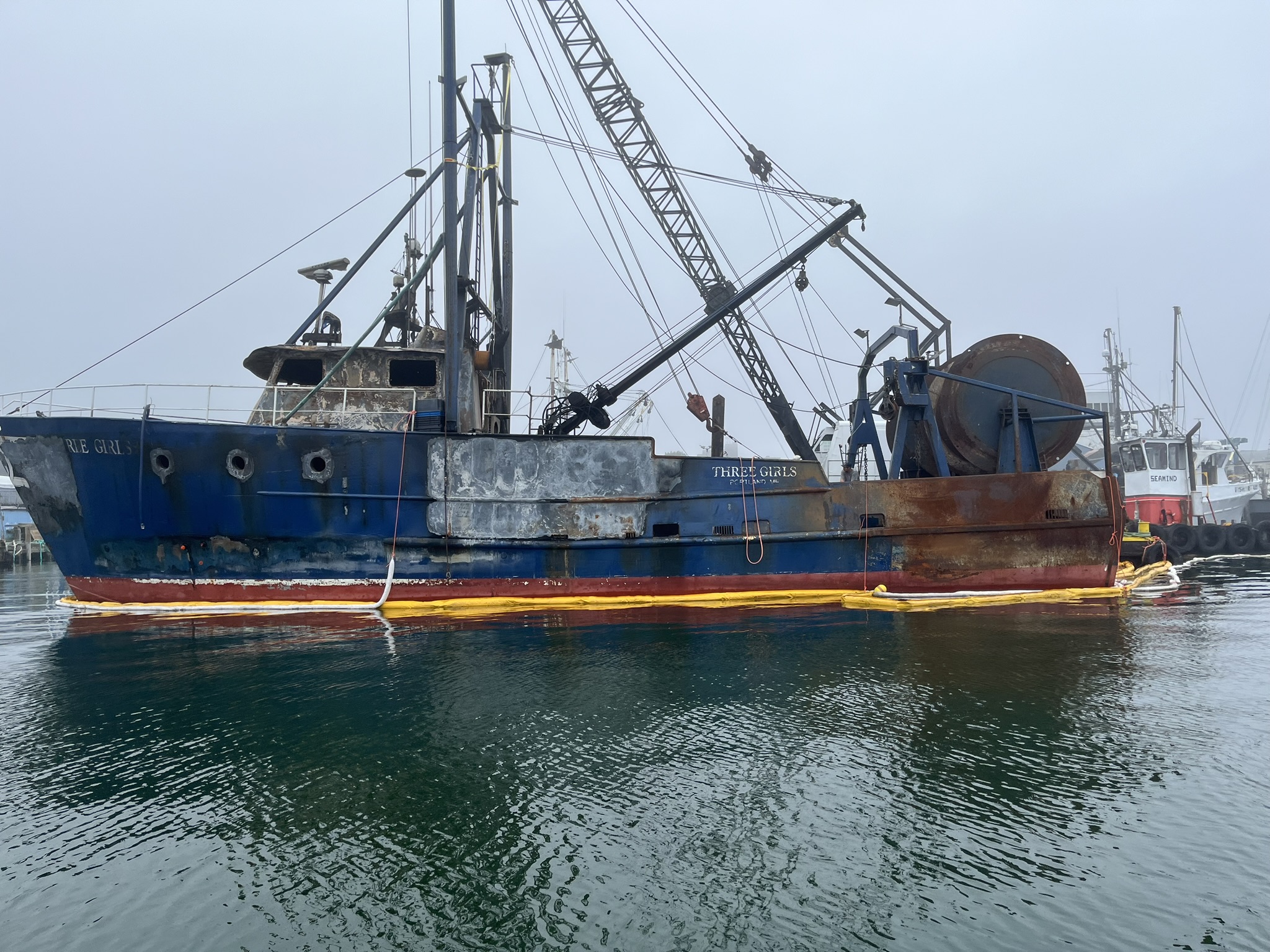
The Three Girls docked in Portland, Maine, on August 14, 2024, three days after the fire. Photo: NTSB
On the night of August 11, 2024, the 81-foot fishing vessel Three Girls caught fire roughly 100 miles offshore in the Gulf of Maine. The captain, a longtime Liferaft Services customer, made the quick decision to abandon ship. He moved his four-person crew and their NOAA observer into the vessel's inflatable liferaft, a six-person Survitec Zodiac SOLAS A raft that we had serviced since it was new. According to the National Transportation Safety Board, the crew launched and boarded the liferaft less than eight minutes after the captain first smelled smoke.
Thanks to a quick Mayday call and a properly functioning EPIRB, all six were rescued by the Coast Guard within a few hours. As one crew member later recalled, the captain barely had time to make the distress call before smoke filled the wheelhouse. Had he stayed to fight the fire, the story would likely have ended very differently.
There was no time to spare. The liferaft had to be ready to go within seconds, and it was. Whenever there is news of a local vessel sinking or catching fire, the first thing we do is check whether it is one of our customers. This time it was. Knowing that the work we have done over the years to maintain the Three Girls' equipment helped save six lives is the reason we do this work. While we hope no one ever needs the equipment we service, we are committed to making sure that if they do, it performs flawlessly.
When and Where to Service Your Liferaft
The simplest way to determine your next service date is to check the service label attached to your raft's container or valise. It shows when the last service was performed and when the next one is due. If that tag is missing or unreadable, contact the raft manufacturer or your service station with your serial number.
How Early Should You Schedule Liferaft Service?
It depends on the time of year. During spring and early summer, service turnaround can stretch to four weeks or more. In late summer and fall, it can be as short as one to two days.
4+ weeks
Spring & early summer turnaround
1–2 days
Late summer & fall turnaround
Winter
Best time for seasonal boaters
Winter Service Program
If you are a seasonal boater, the best time to service your raft is over the winter, before the spring rush. Our Winter Service Program is built for exactly that: drop off your raft when your season ends and you receive a discount on service, free storage in our heated warehouse over the winter, and pickup or delivery in the spring so the raft is ready when you launch.
Choosing a Service Station
Liferaft Services operates two USCG-approved liferaft service facilities, in York and Belfast, Maine, and services all major liferaft brands. Since we started in 2014, our goal has been to make the servicing process as easy as possible:
- ✓Dockside and home pickup and delivery, so you do not have to haul your raft anywhere.
- ✓A network of authorized partner locations throughout Maine, New Hampshire, and Massachusetts for convenient drop-off.
- ✓Some of the shortest turnaround times in the industry, so you have minimal downtime.
We service every raft as if our own family members would be climbing into it in the middle of the ocean. That mindset runs through our whole team, along with modern systems and processes built to deliver the highest level of safety and accuracy on equipment designed to save lives.
If you are outside our service area, your raft manufacturer's website is the best place to find an authorized service station near you.
Tips for Liferaft Owners
Staying ahead of your service schedule takes a bit of intentional organization. A few habits make a real difference:
- ✓Keep it dry: This is the single biggest thing you can do. Store valise-packed rafts in a dry, protected location away from the bilge, spray, and standing water, and make sure container-packed rafts are mounted correctly.
- ✓Store it properly: Liferafts should be kept in well-ventilated areas away from direct sunlight, excessive heat, and chemical exposure. Avoid areas prone to condensation.
- ✓Maintain a log: Record each service date, the facility used, and the next due date. Keep this log with your vessel documentation.
- ✓Set calendar reminders: Put your next service date in your calendar with a 90-day advance reminder so you are never caught short.
- ✓Inspect between services: Periodically check the container or valise for cracks, moisture, and the condition of the hydrostatic release. Do not open or tamper with the raft itself.
- ✓Know your raft type: ISO coastal, ISO offshore, SOLAS A-Pack, and SOLAS B-Pack rafts each have different equipment requirements and service standards. Knowing which you own helps you ask the right questions.
Keep Your Liferaft Ready
A liferaft in poor condition offers little more protection than no liferaft at all. Regular, certified servicing is the only way to know with confidence that the equipment you carry will work when it matters most.
Check your service tag and get it scheduled. Whether you are planning a coastal passage or an offshore voyage, your liferaft should be the last thing you worry about, because it has already been taken care of. Request a liferaft inspection and repack or call us at (207) 363-0220.
Frequently Asked Questions
How often does a liferaft need to be serviced?
Commercial vessels such as fishing and passenger boats must have their liferafts serviced annually under USCG rules, though new rafts generally get a two-year initial certification. SOLAS rafts require annual service with no two-year extension. Many recreational rafts are certified for longer intervals, so check the service label on your raft for its next due date.
How long does liferaft servicing take?
A thorough service takes an experienced technician four to eight hours or more of hands-on work. Total turnaround depends on the season: up to four weeks or more in spring and early summer, and as little as one to two days in late summer and fall.
What is the most common problem found during liferaft servicing?
Moisture damage. Water inside the packaging corrodes valves, inflation hoses, and CO2 cylinders and can grow mold that degrades the raft fabric. It is most common in valise-packed rafts stored near the bilge or left on deck.
Why is my liferaft service so expensive?
Usually because service was skipped. Flares expire every three years, lighting systems every four to five years, and a gas inflation test is due five years after manufacture. Servicing on schedule spreads those costs out. Skipping years means everything comes due at the same service.
When is the best time to service a liferaft?
For seasonal boaters, over the winter. Servicing after your season ends avoids the spring rush, when turnaround times are longest, and programs like our Winter Service Program add a discount and free heated storage until spring.
Who can service a liferaft?
Only an authorized service station approved by the raft's manufacturer and, for commercial vessels, by the USCG. General marine shops usually do not qualify, so confirm authorization before handing over your raft.